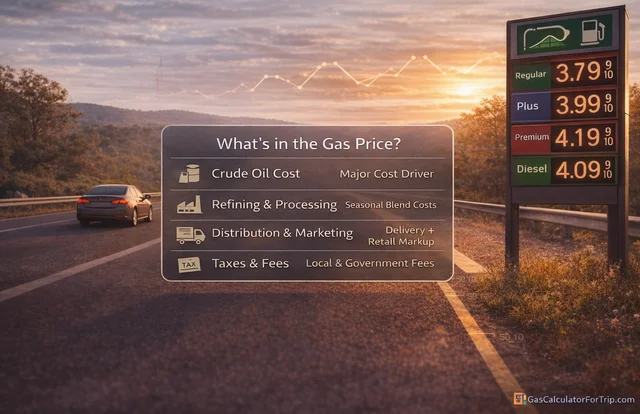

Gas prices fluctuate, driving habits change, and vehicles vary widely — which is why many drivers ask the same question every month: how much do you actually spend on gas? If you’ve ever checked your bank statement and wondered whether your fuel spending is normal, you’re not alone.
The truth is, there’s no single number that applies to everyone. Monthly gas spending depends on how much you drive, what you drive, where you drive, and how fuel-efficient your habits are. This guide breaks everything down clearly, using real-world examples, so you can understand your own fuel expenses and make smarter decisions.
What Is the Average Monthly Gas Cost?
In the United States, most drivers spend between $120 and $250 per month on gas, but this range can shift significantly depending on lifestyle and location.
Here’s a general breakdown:
- Low mileage drivers / remote workers: $60–$120 per month
- Average commuters: $150–$200 per month
- Long-distance or frequent drivers: $250–$350+ per month
Urban drivers often spend more due to stop-and-go traffic, while highway-heavy commuters may spend less thanks to better fuel efficiency. Regional fuel prices also play a major role — what feels “normal” in one state may be considered expensive in another.
What Determines How Much You Spend on Gas Per Month?
Your monthly gas cost is shaped by several key factors. Understanding these helps you identify why your spending looks the way it does.
1. How Many Miles You Drive Each Month
This is the biggest factor. Someone driving 400 miles per month will naturally spend far less than someone driving 1,500 miles.
Typical monthly mileage: – Light driving: 300–500 miles – Average driving: 800–1,200 miles – Heavy driving: 1,500+ miles
2. Your Vehicle’s Fuel Efficiency (MPG)
Fuel efficiency determines how far your car goes on each gallon of gas.
- Efficient sedans or hybrids: 35–50 MPG
- Average cars and small SUVs: 22–30 MPG
- Trucks and large SUVs: 12–20 MPG
Lower MPG means higher monthly fuel spending, even if gas prices stay the same.
3. Gas Prices in Your Area
Local fuel prices can swing monthly costs by $50 or more. Even a $0.50 difference per gallon adds up quickly over time.
4. Driving Style and Conditions
Aggressive acceleration, heavy braking, idling, and frequent short trips all increase fuel consumption. City driving typically costs more per mile than steady highway travel.
5. Commute vs Lifestyle Driving
Some people drive mostly for work, while others rack up miles through errands, family activities, and weekend trips. These patterns affect fuel usage differently.
Monthly Gas Cost Examples (Realistic Scenarios)
To make this more concrete, let’s look at a few realistic monthly driving scenarios.
Example 1: Short Commute City Driver
- Monthly miles: 600
- Vehicle efficiency: 25 MPG
- Average gas price: $3.50/gal
Fuel used: 24 gallons
Monthly cost: about $84
Example 2: Average Suburban Commuter
- Monthly miles: 1,000
- Vehicle efficiency: 28 MPG
- Gas price: $3.75/gal
Fuel used: ~36 gallons
Monthly cost: about $135
Example 3: Long-Distance Highway Commuter
- Monthly miles: 1,600
- Vehicle efficiency: 32 MPG
- Gas price: $4.00/gal
Fuel used: 50 gallons
Monthly cost: about $200
Example 4: Family SUV with Errands & Activities
- Monthly miles: 1,400
- Vehicle efficiency: 18 MPG
- Gas price: $4.00/gal
Fuel used: ~78 gallons
Monthly cost: about $310
These examples show how quickly fuel expenses can climb when mileage and vehicle size increase.
How to Estimate Your Own Monthly Gas Cost (Simple Method)
You don’t need advanced math to estimate your gas spending. Here’s a simple manual approach:
- Estimate how many miles you drive per month
- Divide that number by your vehicle’s MPG
- Multiply the result by your local gas price
Example:
1,200 miles ÷ 30 MPG = 40 gallons
40 gallons × $3.75 = $150 per month
This gives a solid baseline estimate, even before factoring in driving habits or seasonal changes.
Monthly Gas Cost vs Annual Fuel Spending
Many drivers underestimate how much gas costs over time. A monthly expense that seems manageable can turn into a major annual cost.
|
Monthly Gas Cost |
Annual Cost |
|
$100 |
$1,200 |
|
$150 |
$1,800 |
|
$200 |
$2,400 |
|
$300 |
$3,600 |
Seeing the yearly total often motivates people to track fuel usage more carefully and explore ways to reduce costs.
If you want to see the long-term impact clearly, the Annual Fuel Cost Calculator on our site can help turn monthly estimates into yearly projections.
How Your Commute Affects Monthly Gas Spending
Daily work travel is one of the largest contributors to fuel expenses.
Consider this comparison:
- 10-mile one-way commute (5 days/week): ~400 miles/month
- 30-mile one-way commute: ~1,200 miles/month
That difference alone can triple your gas spending. Remote or hybrid work schedules often reduce monthly fuel costs dramatically.
If commuting is your main source of driving, using a Commute Gas Calculator can give you a much clearer picture of how work travel affects your fuel budget.
Practical Ways to Reduce Your Monthly Gas Expenses
Even if you can’t drive less, small changes can lower your fuel spending.
Drive More Efficiently
- Accelerate smoothly
- Maintain steady speeds
- Avoid excessive idling
Combine Trips
Multiple short trips use more fuel than one longer, efficient drive.
Maintain Your Vehicle
- Proper tire pressure improves MPG
- Regular maintenance keeps engines efficient
Plan Routes
Avoid heavy traffic and unnecessary detours when possible.
Monitor Fuel Efficiency
Tracking MPG over time helps identify changes in driving habits or vehicle performance.
Frequently Asked Questions
Is $200 a month on gas a lot?
It depends on mileage and vehicle type. For long-distance commuters or SUV drivers, $200 can be average. For short commutes, it may be high.
How much gas does the average person use per month?
Most drivers use between 30 and 60 gallons per month, depending on driving habits.
Does highway driving really save gas?
Yes. Steady highway speeds typically use less fuel per mile than stop-and-go city traffic.
Should I budget gas monthly or annually?
Both. Monthly tracking helps manage cash flow, while annual budgeting shows the true cost of driving.
Final Thoughts
Knowing how much you spend on gas per month gives you control over one of the most common — and often underestimated — driving expenses. Whether your goal is budgeting, saving money, or understanding your vehicle’s efficiency, awareness is the first step.
Once you understand the basics, tools like commute and annual fuel calculators can refine your estimates and help you plan more accurately. Fuel costs may be unavoidable, but surprises don’t have to be.